


Press Ctrl+G to toggle between English & Hindi
0 Reviews
3821 Views
Special Features. • The ground covered by the book can best be judged by perusal of the Table of Contents. • Subject matter presented in the bo .... Read More
Price: 11201400
You Save 280 20% off
Price: 12601400
You Save 140 10% off
*Buy both at: 2100 2800
You Save 700
25% off
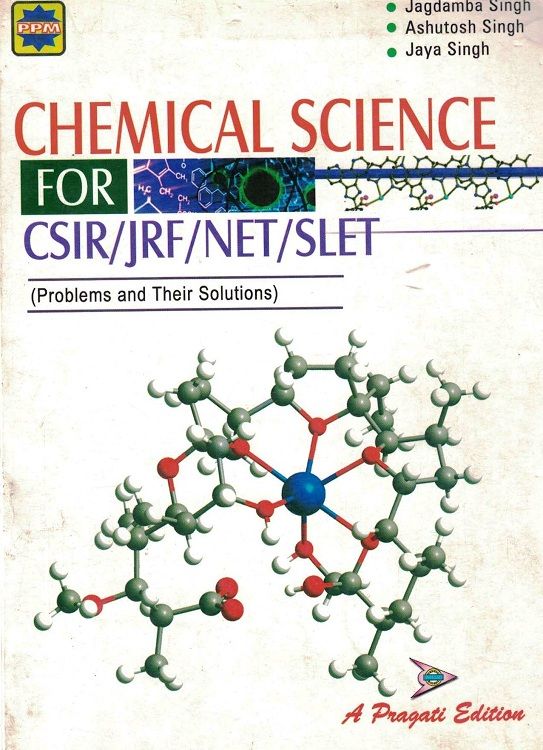
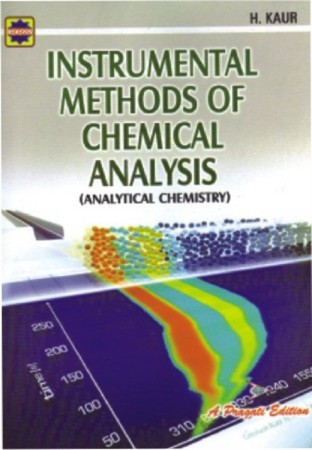
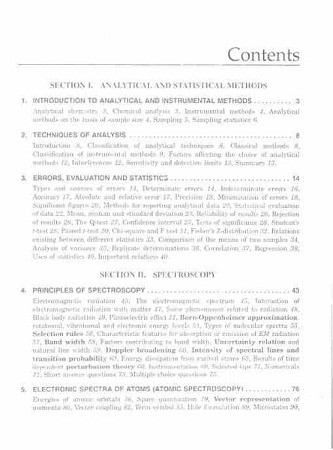
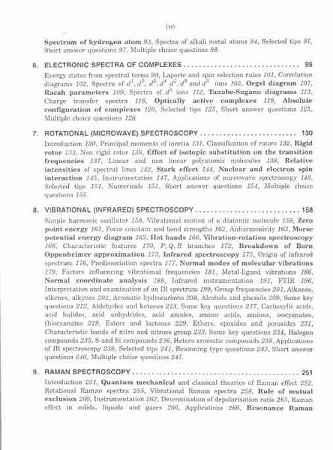
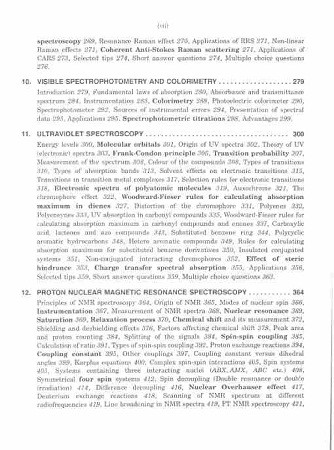
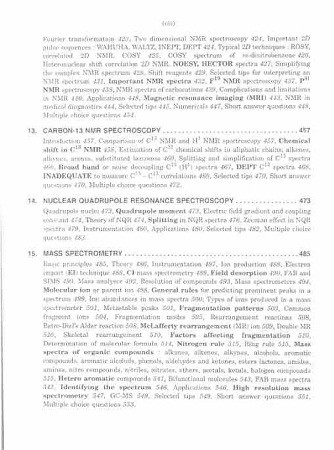
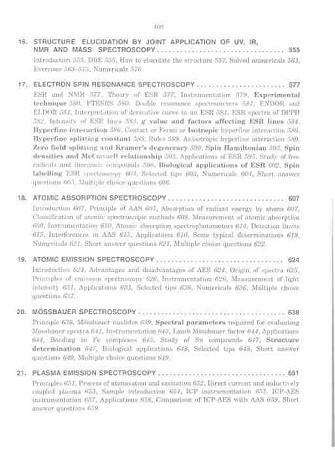
Special Features. • The ground covered by the book can best be judged by perusal of the Table of Contents. • Subject matter presented in the book is sufficiently comprehensive. In discussing concepts, the book also takes into account the modern view points of practical utility involving advanced computerised equipments. • The tables of data collected in each unit are reorganised to make the book more lastingly useful to readers. • Some units have been reordered to better tie together related topics. • The units are equipped with selected tips followed by numericals, short answer questions and multiple choice questions.
| Sr | Chapter Name | No Of Page |
|---|---|---|
| 1 | Section I. Analytical and Statistical Methods— 1. Introduction to Analytical and Instrumental Methods | 5 |
| 2 | Techniques of Analysis | 6 |
| 3 | Errors, Evaluation and Statistics | 28 |
| 4 | Section II. Spectroscopy— 4. Principles of Spectroscopy | 33 |
| 5 | Electronic Spectra of Atoms (Atomic Spectroscopy) | 23 |
| 6 | Electronic Spectra of Complexes | 29 |
| 7 | Rotational (Microwave) Spectroscopy | 30 |
| 8 | Vibrational (Infrared) Spectroscopy | 93 |
| 9 | Raman Spectroscopy | 28 |
| 10 | Visible Spectrophotometry and Colorimetry | 21 |
| 11 | Ultraviolet Spectroscopy | 64 |
| 12 | Proton Nuclear Magnetic Resonance Spectroscopy | 93 |
| 13 | Carbon-13 Nmr Spectroscopy | 16 |
| 14 | Nuclear Quadrupole Resonance Spectroscopy | 12 |
| 15 | Mass Spectrometry | 70 |
| 16 | Structure Elucidation By Joint Application of UV, Ir, Nmr and Mass Spectroscopy | 22 |
| 17 | Electron Spin Resonance Spectroscopy | 28 |
| 18 | Atomic Absorption Spectroscopy | 19 |
| 19 | Atomic Emission Spectroscopy | 14 |
| 20 | Mossbauer Spectroscopy | 13 |
| 21 | Plasma Emission Spectroscopy | 9 |
| 22 | Flame Emission S[ectroscopy | 18 |
| 23 | Photoelectron Spectroscopy | 16 |
| 24 | Photoacoustic Spectroscopy | 9 |
| 25 | Polarimetry, Optical Rotatory Dispersion and Circular Dichroism | 19 |
| 26 | X-Ray Spectroscopy | 27 |
| 27 | Electron Diffraction | 9 |
| 28 | Neutron Diffraction | 8 |
| 29 | Molecular Luminescence, Fluorometry and Phosphorimetry | 25 |
| 30 | Nephelometry and Turbidimetry | 11 |
| 31 | Symmetry and Group Theory | 23 |
| 32 | Shapes of Inorganic Molecules | 12 |
| 33 | Section III. Electroanalyt1cal Methods— Coulometric Methods | 24 |
| 34 | Conductometric Method | 14 |
| 35 | Oscillometry or High Frequency Titrations | 6 |
| 36 | Amperometry | 12 |
| 37 | Voltammetry and Polarography | 32 |
| 38 | Potentiometry | 17 |
| 39 | ph Measurements | 16 |
| 40 | Electrogravimetry | 20 |
| 41 | Section IV. Thermal Methods of Analysis— Thermogravimetric Analysis | 12 |
| 42 | Differential Thermal Analysis | 7 |
| 43 | Thermometric Titrations | 6 |
| 44 | Section V. Separation Techniques— Chromatography | 6 |
| 45 | Partition Chromatography | 9 |
| 46 | Paper Chromatography | 15 |
| 47 | Column (Adsorption) Chromatography | 9 |
| 48 | High Performance Liquid Chromatography | 22 |
| 49 | Thin Layer Chromatography | 22 |

Thank you for sharing the details. Your enquiry has been submitted successfully. We will contact you soon.